
Diabetes Video: Questions / Comments? (IMCL)
Added 2018-09-20 15:18:51 +0000 UTC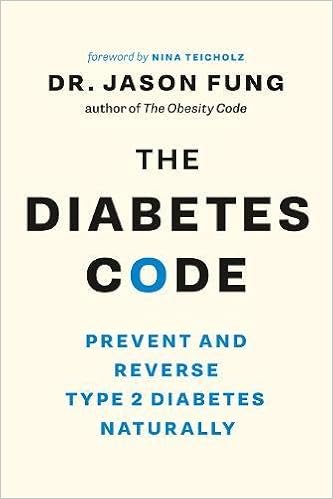
Hey everyone,
My next video is going to be on diabetes with a title like "Why is it so hard to cure Diabetes? (Type 2)" -
★There's a point I'm curious to see your thoughts on, so see below under "Intramyocellular Lipids"
In the video I'll lay out why it's not that curing/reversing diabetes is complicated (in fact, it is very simple), but what makes it difficult is getting past several mental roadblocks that bad science/bad advice has created, for example:
-Diabetes is a progressive, chronic disease
-The way to manage diabetes is by giving patients insulin
-Gaining weight (through caloric surplus) is the cause of diabetes
-The way to lose said weight is CICO or Exercising away calories
-A calorie is a calorie
-We need 6 meals a day (or 3 w/ snacks) to keep metabolism going to lose weight
-You need carbohydrate in a healthy diet (Low carb = Low Lifespan)
-Glucose is necessary for the brain to function
-All fat is unhealthy
-*Fat is the cause of diabetes (Vegan Docs)
-Fasting will put you in "starvation mode" etc.
-Ketosis is a pathological state
★I may get into the industry side - "Heart Healthy" check is basically for sale, Insulin is a big market, American Association of Diabetes Educators has an "Industry" type membership and so on

If y'all have any comments or questions on those specific things or anything else let me know and I might be able to address it in the video, but for now...
︎there's one point I've been trying to come up with a way to concisely address without having to get too deep into it.
⬇︎Intramycellular Lipids⬇
One of the things that bugs me is that while plant based diets do produce pretty good outcomes for diabetes, it's not for the reasons most vegan advocates say. The point I've seen Neal Barnard, Michael Greger & Garth Davis make is that diabetes is not caused by sugar, it is caused by excess dietary fat.

Neal Barnard says in this TEDx talk That the way this works is that insulin resistance is caused when insulin, the "key" to letting glucose into the cell for energy has the lock "gummed up" by fat in the cell (intramyocellular lipids). (Michael Greger has a video on this as well)
Barnard, after explaining this "fat gumming up the lock for the insulin key" then goes to talk about the beneficial effects of a low fat vegan diet on diabetic outcomes, as presented in this study.["Participants were asked to 1) avoid animal products... 2) avoid fatty foods...; and 3) favor low–glycemic index foods, such as beans and green vegetables."]
Barnard in his TED talk didn't highlight the fact that his diet is super high in fiber and promotes low-GI carbs, rather, suggested that the benefits came from the fact that it lacks animal products and fats.
Anyhow, the idea that intramyocellular lipids (IMCL) are at least involved in insulin resistance has merit: "The overaccumulation of various lipids in the skeletal muscle has been linked with an increase in insulin resistance in obese and lean adults, as well as in nondiabetic offspring of type 2 diabetic subjects (Jacob et al, 1999; Krssak et al, 1999; Boden et al, 2001; Ashley et al, 2002; Kelley et al, 2002; Sinha et al, 2002)".[R]
So, we're left with two questions:
(1) Are intramyocellular lipids the cause of diabetes, or do they just come along for the ride?
(2) How did these lipids get there? Was it the dietary fat like Barnard says?
Question 1: I'd say No, IMCL is not the causal factor of insulin resistance.
・First, exercise is well known to restore insulin sensitivity - this is not disputed. Yet, as this study found, "exercise training increased IMCL by 21%." This phenomenon is actually called "athlete's paradox" "in which endurance-trained athletes, who possess a high oxidative capacity and enhanced insulin sensitivity, also have higher intramyocellular lipid (IMCL) content."
・Next, in the earlier referenced paper, a study was done looking at the IMCL of lean and obese people.
As expected, lean people were more insulin sensitive as indicated by a lower HOMA score (Homeostasis Model Assessment Index) - [1.01 vs 1.89] and lower fasting plasma insulin [4.77 vs 9.52]. IMCL content was also much higher in the obese people.
Then, the obese people were put on a program to lose weight, reducing their body weight by about 10 kilos. They looked at these same markers after the weight loss and compared that with before the weight loss:
-Their insulin sensitivity improved quite a bit, mean fasting insulin went from 8.36 to 6.68 & the mean HOMA went from 1.70 to 1.08 (mean HOMA is different from the 1.89 mentioned before because some dropped out from the weight loss portion of the study.)
-However, the overall IMCL did not decrease significantly enough to account for the improvement in insulin sensitivity. The IMCL-TA (tibialis anterioris) did lower from .597 to .468, but the IMCL-SOL (soleus muscle) actually raised from 2.28 to 2.45. As the author says: "After weight loss there was a significant decrease of 22% in the IMCL of the TA muscle. This decrease in IMCL was not correlated with the decrease in insulin resistance by HOMA or the improvement in glucose tolerance by lnAUCG, even after adjusting for percent of total weight or TBF lost."
The paper later says again: "In this study there was a 22% decrease in IMCL levels in the TA muscle with a mean 10% weight loss. This decrease in IMCL was significant, but it was not correlated with the mean 36.5% improvement in insulin resistance by HOMA..."
Question #2: How did the fat get there? Did the fat that you eat go straight to the muscle cells?
★It depends.
◆Via re esterification, dietary fat can be stored as fat (more explanation here -timestamp 3:47). And, high dietary fat intake seems to increase IMCL: (Study: "The high‐fat diet significantly increased TA‐IMCL and SOL‐IMCL by ∼30 and ∼20%, respectively...")
But... re-esterification is an insulin facilitated process. Were these keto-adapted people fed a ketogenic diet? Hardly. "Each subject was provided a 3-day isocaloric normal-fat loading (25% fat, 55% carbohydrate, 20% protein) and a 3-day high-fat diet (60% fat, 20% carbohydrate, 20% protein)." Ironically their insulin improved after just 3 days on this reduced carb diet, going from mean 4.26 to mean 3.32 . I would guess that despite the reduction in insulin, there's still enough to store more of that huge substrate of fat as IMCL.
◆But dietary fat isn't the only substrate that gets stored as fat in the body... What happens when you go on a ketogenic diet? Your triglycerides go way down!

This is because excess carbohydrate is turned into trigylcerides in the body.
As per that dissertation from earlier: "Insulin also suppresses the breakdown of fat in adipose tissue and prevents triglyceride hydrolysis and the subsequent release of fatty acids. Insulin promotes glucose transport in adipose tissue for the synthesis of glycerol and triglycerides in adipose tissue. Therefore, insulin stimulates the accumulation of triglycerides in adipose tissue and promotes the use of carbohydrates for energy instead of fatty acids."
Unsurprisingly, we have a study finding that high carb diets increase IMCL.
So is it the carbs or the fat getting fat stored in the body (and in the muscles)? Probably more important than either of those is the insulin.
- - - - -
(I wanted to get into the Randle Cycle but its getting pretty late and wanted to post this tonight. If you have a copy of the diabetes code, see Chapter 7)
This is all I'll put for now for points that directly "debunk" the Barnard idea, but it would be great to hear any thoughts or comments on this. I don't want to spend much time being confrontational towards the vegan doctors; just want to quickly address this point so it doesn't cloud people's understanding of the aetiology of diabetes. (I might use this as a segway to start talking about where fat accumulation really matters: in the liver and in the pancreas.)
Of course any comments/questions/paradoxes regarding diabetes you'd like to see addressed in the video, I'd love to hear!
Have a great night,
Joseph