Spider-Man, a hero with bills to pay
Added 2018-12-27 15:44:28 +0000 UTCSpoilers for various Spider-Man comic canon, Invincible Iron Man: Unfixable, Spider-Man (2018) for PS4, Spider-Man: Homecoming and very light spoilers for Into the Spiderverse
Section 1: Introduction
“With great power comes great responsibility"
The new Spider-Man game opens with Spider-Man getting a call from the police chief and then rushing off to help arrest Wilson Fisk, the Kingpin. We see the Spider-Man costume, the newspaper clippings, and various things that tell us it’s Spider-Man we’re dealing with but the first thing we see that tells us about Peter Parker as a character is a Rent Overdue letter that is slipped under the door. This is the first thing we know about Spider-Man: He is a hero with bills to pay.
The balancing act between school, work, family, friends, love life and also being a superhero are essential to the character, and have been from the beginning. As time has passed, Peter Parker’s identity as a kid from a single parent family in a poorer area of Manhattan evolved as the perfect extension of his identity as the relatable underdog.
In this essay I’m going to talk about Spider-Man. I love Spider-Man. I’m going to talk about all different kinds of Spider-Man. Spider-Man comics, Spider-Man games, Spider-Man films. There’s no real point trying to put one version of Spider-Man above another since there is one that is objectively the best and it’s Toho Spider-Man.
So I’m not talking about one Spider-Man or another Spider-Man, I’ll use examples, but I’m talking about the core, essential Spider-Man, the... spinne-gattungswesen.
I want to offer what I think about the character, why I think it’s one of the best characters ever written and I guess just talk about some things I like, because… guys I really like Spider-Man, and I’ve got some things I want to say.
Section 2: The Modern Myth
“Just because you have superpowers, that doesn’t mean your love life would be perfect. I don’t think superpowers automatically means there won’t be any personality problems, family problems or even money problems. I just tried to write characters who are human beings who also have superpowers.”
Superheroes are sometimes called “the modern myths”. In a sense they are. They are characters we know intimately well that are born and reborn across infinite stories without strict canon. They are there to teach us who to be and how to be.
We talk about these characters like they’re real, just like Ancient Greeks did with their mythical characters. Incidentally, I think we should consider whether the Ancient Greeks really thought mythical characters were real people. Sure we have accounts where someone might say “this reminds me of when Orpheus couldn’t look at Eurydice”, but would be all that weird for someone now to write “this reminds me of when Captain America got hypnotised into thinking that the NYPD were Neo-Nazis by Baron Zemo”. It wouldn’t mean that person thinks Captain America is a living breathing human being. It means they, and we, see these characters as real in a different sense altogether.
Comic book characters represent things in real life, be they human struggles, philosophical questions or even political concepts. Jason Dittmer, author of Popular Culture, Geopolitics and Identity talked about being in a geography class and understanding it because of what he’d seen in episodes of Star Trek, so I guess all you fuckers on Reddit who told me not to bring politics into Star Trek can get in the sea because I have a university professor on my side. And anyway I saw you coming you hacks, I made the video thumbnail for it in advance to make fun of you.
Dittmer has also talked about comic book characters and what they represent politically. For example, Captain America can be used as a handy metaphor for the writer to express what they think America is, or what they think America should be, or what it’s currently doing wrong. The character was invented by two jewish artists who wanted to convince America to get involved in World War II. After World War II was over, and the cold war began, Captain America quit punching Nazis and started punching filthy commies instead. Through the height of McCarthyism Cap battled soviet threat after red menace, but then, as the hysteria passed and America grew embarrassed of the anti-communist witch hunt, Captain America became increasingly unpopular, due to his association with McCarthyism. In an attempt to revive the character, Marvel rebooted the series and had Steve Rogers discovered frozen in a block of ice. They initially tried to retcon the previous decades of commie-punching, but soon realising that wouldn’t do, they wrote that the Captain America who’d been running around in the interlude was an impostor. So there was a Captain America who was real, who was back now, and that Captain America from before - he was fake. That wasn’t the reaaaal Captain America. Look, to paraphrase Innuendo studios: Comics aren’t good because they’re subtle.
Even recently there was a storyline where the Red Skull rewrote history using the tesseract to make Captain America a secret member of Hydra - Hydra being an evil occult organisation that among other things worked with the nazis. There was a bit of a controversy over this, because of the outrageous move to “reveal Captain America had always secretly been a Nazi”. But like: the full story arc was that when the Red Skull, a Nazi, rewrote history to make Cap a secret Hydra Agent, there was “Hydra Cap” who was evil, and there was actually a second Steve Rogers, created from the memories of his friends. So there was a Captain America who turned out to be a secret super-nazi, and another, good Captain America that was how his friends remembered him and they all had to work together to make Captain America how they remembered from before. It’s not good cos it’s subtle.
The myth of spider-man is the story of a young person trying to live up to great expectations. The superpowers aren’t the important bit, although in some ways the superhero Spider-Man fits the character so well it’s almost metaphor. Anyone who’s been a young adult trying to get by knows the feeling of swinging from place to place, never totally safe, simultaneously a little excited and totally terrified… come on Eric just do one essay without referencing your crippling eternal brokeness.
Spider-Man is the myth for people in a part of their life where the system isn’t really working perfectly for them. That’s why when I think of the comics I always think of this one Christmas arc where he has to save New York but he also has a cold and he wears a hat and scarf over his costume the whole time. It’s why the common collective idea of Peter Parker either has a job with the Daily Bugle or delivering pizzas. Aspirationally, you’re meant to be just like Peter Parker for a bit, and eventually you’ll get so successful you’ll be Tony Stark, right?
Since for some people though, not being accepted isn’t just one phase of their lives, Spider-Man turns out to be a myth that teaches us empathy, and shows us how different groups of people are marginalised in similar ways. In fact, when Peter Parker grows up in the comics he enters kind of a weird phase. Being successful and rich doesn’t suit Spider-Man. There’s a bit in a recent arc where Tony Stark hires Mary Jane as his assistant, and Peter tries to hire Pepper Potts as like… a petty revenge move? It doesn’t work, and it’s... very embarrassing.
X-Men is commonly pointed to as being the Marvel comic about gay people. First premiering in the 80s during the AIDS crisis, it featured a group of flamboyant young people who were different in a certain way that could naturally occur to anyone in any family, often made people hate them and forced them to run away, there are certain diseases that only affect their group and at any point in the canon looking towards their future shows a world ravaged by a war to exterminate them all - the threat of genocide against them is always hanging over them.
I bring this up because X-Men is most obviously about gay people, but the way their system and world is created the marginalised group they represent could really be anyone, and that’s kind of great. That’s kind of exactly why it works.
In Spiderverse it is established early that Miles’ dad, a cop, doesn’t like Spider-Man, because… yup. After Miles gets his powers and meets Spider-Man and comes home, he asks his dad “hey dad, you hate Spider-Man, right?” and his dad says “you know how I feel”. The question hanging in the air is “Dad, if I was Spider-Man, would you hate me?” I mean it’s not good because it’s… actually.. It’s really good, and in this case, it’s quite subtle.
Miles’ dad’s arc in Spiderverse is complex but a part of it has to do with this dislike of Spider-Man. During the final conflict, Miles is knocked down by Kingpin, and Miles’ dad, who doesn’t know he’s Spider-Man, who we’re sure hates Spider-Man, who we know doesn’t like Spider-Man definitely for sure, calls out to him, yelling “GET UP Spider-Man!”
and then I cry a lot.
In the first pages of Amazing Spider-Man issue #33, an iconic scene in Spider-Man canon, Spider-Man is trapped under heavy rubble and exhausted from fighting in a flooding room. It looks like there is no way out for him, but in what is apparently a narratively empty moment, that has gone on to define so much about the character for years to come, Peter Parker thinks of his family, and his Uncle’s death, and he finds the strength to free himself.
In a similar scene in Homecoming, Peter is trapped under rubble and can’t lift it, and his cries for help remind you on a visceral level that he is just a child. Tom Holland’s performance is honestly just astonishing. As this iteration of Spider-Man frees himself he says to himself “Come on Peter. Come on Spider-Man. Come on Spider-Man.”
So when Jeff shouts out to Miles “GET UP Spider-Man!” it isn’t just the culmination of an arc about a father accepting his son for being different in a way he can’t admit, it’s also the evolution of a theme and of a scene repeated across the iterations of the myth of Spider-Man. Spiderverse repeatedly says in no uncertain terms that Spider-Man’s greatest power is his ability to always get up again when he gets knocked down. This, as a defining trait of the character of Spider-Man ties in with his emotional, interpersonal and financial struggles. It is saying in more ways than one that the greatest power you can have is the ability to get up again no matter how many times you’re knocked down.
Section 3: Validation and Validity
“I have always included minority characters in my stories, often as heroes. We live in a diverse society — in fact, a diverse world, and we must learn to live in peace and with respect for each other.”
Spider-Man is a working class kid trying to survive, living multiple lives at once. He has lost people, and he is uncertain about the future. He makes me feel valid.
You might not think of Spider-man as a 'working class hero' but he is, inarguably, a working class hero. A hero who is working class.
(he also dresses in red and black and beats up rich guys and his mantra is a rewording of “no unjust hierarchies” so… yeah)
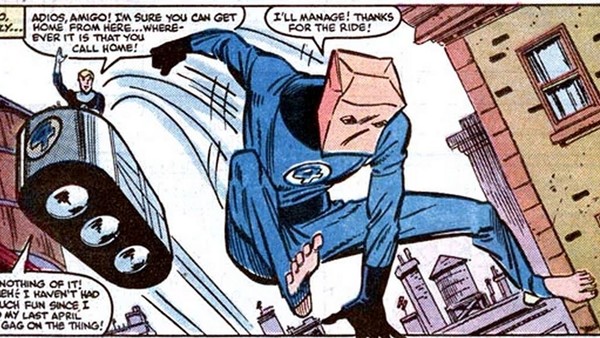
The game, Spider-Man (2018) is fantastic in so many ways. It’s nearly perfect, the only thing significantly holding it back is that there isn’t already a Bombastic Bag Man costume.
The game strikes that exact usual note that Spider-Man strikes that makes him so relatable. It shows Peter as someone struggling to spin too many plates at once: his relationship, his career, his apartment, his family and of course being Spider-Man. As a young person trying to sort out my own life that makes me feel pretty valid. It also helps that there’s a huge LGBT rainbow flag in the game you can’t conceivably miss unless you play it with your eyes closed. That makes me feel pretty valid too.
Valid, valid, valid, I’m so valid. Okay what am I talking about? The colloquial use of “valid” usually by the LGBT community refers to basically feeling like you belong, like you’re allowed. It’s someone telling you “don’t worry bud, it’s all okay”. Thought Slime made a fantastic video about his feelings around being told he was valid after coming out as non-binary. He talked about feeling defensive, as though someone needing to state “you’re valid” was actually doubting the internal sense of validity that he had tried hard to build up. He talked about needing to build up those defensive feelings to protect that sense of validity.
Feeling valid is for everyone, it just makes sense that people who feel on the outside of society could use it more often. It’s nice, when the system isn’t built for you, to be reminded that that’s the case, and it’s not you that’s wrong. Donald Norman talks in The Design of Everyday Things about how when things are poorly designed it can have a depressive effect - create the impression in the user that they are stupid or bad, the reason for the failure. For LGBT folx or people of colour, society is pretty poorly designed, so it can be really nice to be told “don’t worry bud, it’s all okay. You’re valid.”
Like I say though, feeling valid is for everyone. Cishet white guys need validating for them that having feelings is okay, and allowed. That they can have a sexuality that is not inherently predatory. That they can have friendships that aren’t competitions.
Are we all feeling nice and valid? Great, let’s carry on.
There are other, smaller ways the game makes me feel valid too.
J Jonah Jameson is recast as a conspiracy theory podcaster, shouting at “Low Information callers” for liking Spider-Man or generally disagreeing with him, openly promoting both wild conspiracy theories, and of course, merch. Are you guys seeing what I’m seeing? He’s Alex Jones! On some level, silly as this is this makes me feel valid, like I’m not just totally crazy. This makes me feel like grown-ass adults, the kind of grown-ass adults who can make a Spider-Man game no less, see the same bizarre hellworld we live in that I see.
The game also presents fresh takes on characters I personally, even as a lifelong Spider-Man fan, found a bit stale or odd. Martin Li, or Mr. Negative in the comics is an illegal immigrant who snuck into America to be with his wife, except no he’s actually not, those are stolen memories and actually he’s a human trafficker who killed the real Martin Li and then snuck into America and became a millionaire. What can I say but yikes.
His power is that he has a dark energy when in his evil persona Mr. Negative, and he has a gang called the Demons who wear these chinese opera masks or in some versions the gang is just a few close members of his inner circle - the Inner Demons.
I never really had much interest in reading stories with Mr. Negative in because his whole deal kind of stank from a mile away of oriental mysticism and anti-immigrant nonsense and different asian cultures non-discerningly crammed into one person. The new game takes a bit of a fresh perspective on Martin Li though. For one thing, he isn’t an immigrant, and he is Martin Li. For another, his powers are really tied to his trauma: his parents were killed in an experiment that also made him like this.
In the game Peter Parker travels into the psyche of Martin Li twice, and in there battles a giant spirit-demon, and when he defeats it, Martin Li is saved. See when you defeat the demon on the inside, he stops being Mr. Negative. When you help him battle his inner demons, he -- look it’s not good cos it’s subtle.
It’s good because even when Spider-Man defeats his enemy what he really does is save him. That sense of validity, being shown that you’re okay, and you aren’t the problem, is tied into how empathic the writing is.
Spider-Man: Homecoming reframes the classic superhero narrative really interestingly. Where we would expect a few tokenistic scenes to explain who the villain is and what they’re up to, we get like, tons of time spent explaining why Adrian Toomes does what he does. He’s a working class dude and Stark made his business defunct so he hates Stark. He wants to care for his family and his business, and as long as he’s got his he doesn’t care what happens to everyone else.
Peter Parker is a working class kid from a single parent family in a poor neighbourhood. He’s succeeding because he’s like, really smart but his aunt has to work full time to make sure they do okay, so we know that pizza delivery job is a dead cert. when he eventually gets into college.
We have the classic superhero coming-of-age arcs and the good guy fights the bad guy and the bad guy goes to jail. Or, does he? Because after Toomes goes to jail we explicitly see how devastated his family will be by this, and throughout the film Tony Stark’s wealth, and the way he throws his power around are very explicitly harmful to poorer characters and communities, and honestly - is Iron Man the bad guy in this movie? Seriously, Tony Stark gives a teenager a death-machine-supersuit and wants to mold him to be exactly the way he thinks a hero should be, and the end of the movie is actually Peter Parker refusing his offer of joining the Avengers.
You could very reasonably argue Stark and his neoliberal or even semi-neocon politics is the real villain of the piece, and Vulture is just a representative of the working class that has been turned against itself.
This film was released in 2017. In 2016, a huge number of white working class people in America were behind Bernie Sanders, especially younger voters. When Hillary got the Democratic nomination, Trump surged ahead with white voters, making a show of appealing to the white working class (although Trump’s votes were actually spread evenly across classes, they were just all super white).
I don’t want to get too… me about this, but there is literally a scene where Spider-Man and Vulture’s fighting cuts the staten island ferry in half and the ferry is called the Spirit of America. They divided the Spirit of America. Their fighting tore apart the Spirit of America. DO YOU GET IT? BECAUSE MARVEL REALLY HOPES YOU GET IT. It’s not good cos it’s subtle...
The framing of Peter Parker’s relationship to Tony Stark is kind of fascinating. Stark is almost Peter’s jungian shadow. He’s this successful, rich, scientist bro who flies around saving the world, and canonically Peter has idolised him almost his entire life, but he’s a malformed person - an egotistical wreck who constantly makes things worse when he tries to help and might just be doing things for others to serve his own ego. On the other hand, because of Stark’s many personal problems, he wishes he could go back to a time when he was more innocent and start over, maybe not make the same mistakes. As much as Peter wishes he was Tony, Tony wishes he was Peter. They’re like Dr. Dre and Eminem, or Eminem and early-Eminem.
What makes this work even better is that besides being on the same side, Iron Man and Spider-Man are kind of opposites. Tony Stark is a middle-aged man in a literal metal shell who created a weapon out of self-defence. He flies around above everyone and when he reaches out his hand a fucking laser beam shoots out to destroy things. His mask even looks like a dude with a receding hairline, and when he’s in the suit he is literally seeing the world through a lens he made for himself. Spider-Man is this kid who got powers and immediately decided it was wrong not to help people with his abilities. He swings around, soaring through the air but permanently tethered to the real world. His mask has these big, wide eyes because ultimately what defines Peter Parker as a character is curiosity. His costume is just clothes, so he’s kind of vulnerable, out in the open. When he reaches out his hand he fires webbing, to either stick someone down and stop them from doing harm or to hold things together.
So there’s kind of this fascinating balance, right? A struggle between validation and validity. On the one hand you have the ultra smart, ripped, womanizing billionaire genius. The ultimate male power fantasy. On the other hand you have a nerdy kid from Queens who is just trying to get by while also doing the right thing. A superhero with bills to pay, the ultimate relatable underdog.
Let me be clear: validation isn’t bad, I’m not condemning the concept of validation, that would be wild (who would ever do that??) I’m just trying to distinguish between validating people who are already doing well, telling them the things they are aspiring to are cool and good and ignoring any downsides - validation - and letting people know the natural human things they are doing like existing or being in love or getting horny on main or having feelings are perfectly natural - validity. For the purposes of this essay, we’re talking about validation: “you’re great and cool and nothing you ever do is bad” and validity: “you aren’t bad just for being a person”.
If you are a cishet white guy, Tony Stark validates you as a cool cishet white dude, but Peter Parker teaches you to actually be a cool cishet white dude, like someone who is empathetic and kind and neat and good. But Peter Parker as a cishet white dude isn’t the point - Spider-Man as the outsider is.
Miles Morales and Spider-Gwen are beloved characters, and I feel like on some level their creation was inevitable because ultimately Spider-Man is a great underdog, but he also has some bills to pay. Stan Lee created an amazing character that tonnes of people find relatable and empowering, but at the end of the day Peter Parker is still white, cis, male and heterosexual (for now).
I’ve seen trans women who are fans of Spider-Man call Peter Parker “an obvious closeted trans woman” and although I’m not going to get into that debate right now (they are correct) it speaks to how intensely relatable Spider-Man is and how well the character relates to being a marginalised member of society. I think because of that, it was only natural that the writers would want to create alternate versions of Spider-Man, alternate realities where Spider-Man is a woman, or a black teenager. There are just certain perspectives Peter Parker can’t explore.
Spider-Man is a character you should expect to get rewritten and reimagined, and whose secret identity should change, because the identity of the person under the mask has everything to do with who the character is.
Section 4: Eight-Legged Freaks
“For years, kids have been asking me what's the greatest superpower. I always say luck. If you're lucky, everything works. I've been lucky.”
All the best Spider-Man villains are in some ways reflections of Spider-Man. The Vulture is a working class guy taking on the rich and powerful; Sandman just cares about his family; Venom started out as a metaphor for drug dependency, a common problem people in Peter Parker’s situation encounter. Venom is almost literally Spider-Man’s shadow and then when Peter Parker finally “kicks” his use of “venom”... look comics aren’t good because they’re subtle - when Peter finally gets clean, Eddie Brock, Peter’s rival, takes Venom on and is consumed by it. Even less famous antagonists have something to offer, like Tombstone, the indestructible gangster. Tombstone is an albino African American and he was bullied as a child for being different, which made him rely on being tough. Peter Parker is a working class kid, but as a sciency little nerd he’s also an outsider within his own marginalised community.
Not all the Spider-Man villains reflect something about Spider-Man though, there’s also like… Hammerhead. He just hits things with his head… he’s just got a really hard head. Like, what? Who created this character?
There are also the clones, which don’t really say anything about Spider-Man, they just are Spider-Man. It’s um… kind of a wasted opportunity. Nonetheless, it speaks to the nature of the character relationships in Spider-Man, as though the clone saga were this ongoing subtext rising to the level of text.
Perhaps no villain reflects Peter Parker quite as much though, as Dr. Otto Octavius. Otto is an older, in some ways embittered scientist, and in most versions of his story he is suffering from a neurodegenerative illness. He’s brilliant and talented and nerdy and wants to help people. Crucially, and different from Iron Man, he’s a bullied and downtrodden character. It’s a similarity with Peter that Tony doesn’t have. Then though, because of his sickness, because of his bitterness, and because of neural interface experiments that damages the parts of his brain that blah blah blah, Otto decides he’s had enough and the rest of the world can go screw. He’s only going to look out for number one from now on.
He’s everything young Peter Parker wants to be and at the same time so wrong. Ultimately Spider-Man knows he could have become Dr. Octavius. He’s Peter’s perfect parallel. There’s even the character names! Stan Lee compulsively named characters with alliterated first and last names, and what’s right next to P for Peter Parker in the alphabet? O. For Otto Oct-- this is too far right? I can kind of tell when I’m going a bit far...
For real though, no villain reflects Spider-Man as well as Doc Ock. It’s no accident that Dr. Octopus, modeled after an eight-limbed creature, is the nemesis of Spider-Man.
When Dr. Octavius first appears with the robotic arms, or if you’d rather, when Dr. Octopus first appears, he says “For the first time in my life I don't feel like a failure. I feel like ME.” In some sense Otto’s sickness is metaphorical. The real sickness isn’t the one in his body, it’s the one in his soul.
Superheroes are sometimes called “the modern myths”. In a sense they are. They are characters we know intimately well that are born and reborn across infinite stories without strict canon. They are there to teach us who to be and how to be.
Otto Octavius is using a prosthesis that makes him more powerful. He’s always imagined himself like this, so he sees this as his true self, and his whole life feeling beaten down and denied what he’s entitled to makes him want to use this new power to rule over others and get what he wants for himself.
The scene between Peter and Otto after Otto is defeated is fantastically written, the dialogue taking the form only a conversation between two people who know each other really well can. They talk totally past each other, understanding each other too well and responding to what the other means and not what they say.
Peter: “I worshipped you. Your mind, your conscience. Wanting to help others. The way you never gave up.”
Otto: “That’s because men like us have a duty - a responsibility - to use our talents in the service of others. Even if they don’t appreciate it. We have to do what’s best for those beneath us, whether they understand it or not.”
Peter: “No! You’re wrong! You were everything I wanted to be!”
Peter isn’t saying they shouldn’t help people, he’s saying that the people without powers aren’t beneath them. This is fundamental to the ideological difference between them. Otto sees people who aren’t as smart as him as dependents, negotiating how much of his worth they get to share, and since they are beneath him his actions don’t have to be accountable to them, but Peter sees every human being as equal. Otto got his arms and saw it as an elevation above everyone else; Peter got his powers and saw it as only fair to use them to help everyone.
Thanks to ma boi videogamedunkey, it’s become a bit of a meme that the game makes you FEEL like Spider-Man. It’s not just because of dunkey, it’s also because of the industrial game reviewers. It’s also not just because of them: the game’s official tagline is actually “Be Greater”.
When we talk about people deriving validation from media - especially games, where you see yourself as the character so entirely - when we talk about “you’re great and cool and nothing you ever do is bad” yeah the marketing and reviews for this game are pretty bad. The game pretty clearly tells you to learn from the character and “be greater” by you know, being nice to people. Doing what’s right. Helping. The marketing and reviews on the other hand lean pretty hard into how important it is to feel like Spider-Man.
We draw validation from playing as a powerful character in a game. Even more so when the player character is an established persona, a known quantity, a myth. A game is inherently a challenge to be beaten, and beating it is rewarding. Beating harder games feels more rewarding and back when games were simpler and there were fewer possible moves, even using a cheat code felt like a valid and rewarding way to beat the game, because you were still outsmarting the puzzle somehow.
So when you’re someone who feels like they should be special, like they should be better than everyone else, playing as this character can mean a lot to you. You’re using a prosthesis that elevates you above other people.
“For the first time in my life I don't feel like a failure. I feel like ME.”
So there’s this expectation of who the player will be and what they’ll want, and the expectation is that they want validation, not validity.The person looking at the screen isn’t learning from the person on the screen, they’re just imagining themself as that person.
In the game there are several sections where you play as Miles Morales - currently not superpowered - and Mary Jane Watson. Even though you don't have superpowers, in these sections you are doing things that are essential to the plot, that ultimately are what Spider-Man would do if he didn't have powers too.
All I’m trying to say is, if you didn’t like the missions where you play as MJ or Miles you’re wrong, and you missed the point of the whole game, and Spider-Man in general, and you’re going to be banned from talking about games for thought crime.
Okay, how about this: All I’m trying to say is that we take validation from things like Spider-Man, when really it’s trying to give us validity.
Section 5: Conclusion
“That person who helps others simply because it should or must be done, and because it is the right thing to do, is indeed without a doubt, a real superhero”
Tony Stark is Peter Parker’s shadow, his dark reflection - a bad possible version of what he could become. Otto Octavius is the same, a dark reflection of Peter Parker. At the same time though, Tony and Otto reflect each other.
In the Invincible Iron Man story Unfixable, Doc Ock holds New York hostage with a nuke and makes Tony Stark grovel and beg and do a bunch of pretty kinky stuff. The story is interspersed with flashbacks developing Otto and Tony’s history. The two of them have been longstanding rivals in the science community, even before their superhero shenanigans. Otto, again and again told him “cheat to win, Stark”. Octavius is so certain of his entitlement to success and victory that his philosophy is just “cheat to win”. At the end of the story he reveals there was no nuke, he just wanted to manipulate Tony into grovelling to him.
I’m not saying Tony Stark isn’t entitled - he was born a millionaire - but the story frames the dynamic as the two brilliant scientists, one who wants to work and achieve things and the other who feels that he deserves everything right away. Tony Stark is still being the typical power fantasy character just trying to be amazing and brilliant, but here he’s brought low by Otto’s bitterness and need for vengeance against a world that hasn’t given him everything he thinks he deserves.
Parker, and Stark and Octavius are all reflections of one another. They’re like three sides of the same… um… anyway, they’re all different takes on the same core character to some degree right?
Spider-Man is not there to imagine being. He’s there to teach you how to be kind, and good, and happy. With great power comes great responsibility. He’s not there to validate you as a white straight dude, he’s there to make you feel valid as an underdog: as a young person, as a black person, as a woman, as someone with lots to keep on top of, as someone society doesn’t quite see as normal, or someone that society misunderstands and misrepresents.
He is our modern myth, and just as with the myths of old, comparing yourself with the mythical figure is a big step in the wrong direction. When Caligula, when Alexander the Great, when Nero compared himself to gods instead of acting in a godly fashion, the people started to recognise something was amiss. Myths are, in lieu of a detailed understanding of history, our cultural blueprints.
In a time when fascists are marching across the globe again, America has a President who can be baited to the precipice of nuclear war with a tweet, and scientists give us just a decade to get our shit together or boil to death on this stupid marble, the kind of myths we need are myths that tell us we can all be a hero, that the greatest things about us are the things that make us different, and the greatest power you can have is the ability to get up again no matter how many times you’re knocked down.
“With great power comes great responsibility”
“Just because you have superpowers, that doesn’t mean your love life would be perfect. I don’t think superpowers automatically means there won’t be any personality problems, family problems or even money problems. I just tried to write characters who are human beings who also have superpowers.”
“I have always included minority characters in my stories, often as heroes. We live in a diverse society — in fact, a diverse world, and we must learn to live in peace and with respect for each other.”
“For years, kids have been asking me what's the greatest superpower. I always say luck. If you're lucky, everything works. I've been lucky.”
“That person who helps others simply because it should or must be done, and because it is the right thing to do, is indeed without a doubt, a real superhero”
- Stan Lee 1922-2018