April 14, 2015: One shot, one kill
by Diamond Feit

In 1980 SNK invented and named the Boss battle as we know it in the video game world, introducing powerful enemies who periodically appeared to test the player's skill in Sasuke Vs. Commander. Originally called oyabun (親分 or "leader") in Japan, English language flyers for the arcade game describe these magic-wielding enemies as "the boss." The term quickly entered Japanese lingo; Namco released Galaga one year later and labeled the enemies who can capture your space fighter Boss Galaga.
Decades of innovation and experimentation later, bosses are not merely commonplace in video games today, they're expected in most genres. I can't imagine playing a shooter, an RPG, or any action title without meeting at least one boss in the first hour. We tend to associate video games with intrepid characters whom we control but in some long-running series, recurring bosses have achieved co-star status. Look at Nintendo's Super Smash Bros. roster and its multiple iconic rivalries: Mario and Koopa, Link and Ganon, Samus and Ridley, the list goes on.
Bosses have flourished to the point that we now have categories for them. Minibosses interrupt the player's journey at unexpected moments, secret bosses provide an extra challenge for those who can track them down, and a final boss lies in wait at the end of many games, standing between the player and some supreme reward. Going back to Japan, the abbreviation rasubosu (ラスボス, short for "last boss") has come to represent any ultimate obstacle; a 2023 commercial had popular pitchwoman Tsubasa Honda utter it as she ate a bowl of ramen.
With this rich legacy of bosses occupying a central place in video games, certain developers have tried to skip the small potatoes and serve up a buffet of bosses to players. Takashi Nishiyama created Street Fighter because he wanted a game focused entirely on the one-on-one showdowns at the end of each floor in Kung-Fu Master. Each boxer in the NES version of Punch-Out!! looks like a boss as they tower over Little Mac with an air of invincibility until the player learns their patterns and knocks them out.
10 years ago this week, a small indie team assembled a collection of boss-like beings and dropped players into their midst in Titan Souls, a game where every fight feels like David vs Goliath.
Titan Souls stars an unnamed youth in an unnamed land. The game begins with a short animation depicting this anonymous adventurer along with a bow and an arrow—emphasis on singular. The three apparently share magical qualities based on the swirls of energy that surround and unite them, but the game leaves those details open to interpretation.
These initial minutes welcome the archer into a realm that seems long abandoned with plentiful stone structures reclaimed by nature. Players can safely fumble about in these ruins and figure out the game's basic controls: One button fires the arrow and the other dodge rolls. Holding down the attack button readies the arrow and draws the bowstring in preparation for a longer, faster shot. Holding down the dodge button lets the archer run.
Forging ahead, the player discovers four small chambers guarding a massive sealed door. The only way to open the door is to enter each room and defeat what sleeps inside. Unfortunately, the occupants all have significant size advantages over the hero and can effortlessly crush the puny human without hesitation.
The only instrument of combat in Titan Souls is that bow and arrow—again, singular—but every guardian in the game has a visible vulnerability. As easily as these foes can squash the archer, so too can the archer slay them with one well-timed strike. Players must investigate and discover each opponent's weakness via trial by fire where getting hit equals failure and a trip back to the last save point.
With these rules in place, every encounter in Titan Souls has the energy of a boss battle as players must think on their toes and take careful aim. A miss does not mean disaster but the archer must retrieve the arrow after each release. Pressing the attack button will automatically pull the arrow back to its owner, although this necessitates standing still and waiting for the arrow to return. The arrow's hitbox remains active during this trip so it's still as deadly as ever, and Titan Souls awards an achievement for killing certain enemies in this manner.
Titan Souls can become frustrating given the archer's fragility and the speed and frequency at which death arrives. Players not only have to figure out each monster's weakpoint, they have to train themselves to expose and exploit it. I could feel my temper growing shorter after every loss, especially in those situations where I knew what to do but couldn't quite get it done.
Adding to my irritation, Titan Souls only allows saving at a select few locations in its open-world layout. You'll never have to redo a boss fight—the game automatically tracks those—but once your character respawns they'll have to hoof it back to the arena to try again, a trip that can take a bit of time. The world of Titan Souls is oversized by design which highlights the hero's miniscule nature but it also means spending upwards of a minute after each death to trigger a rematch.
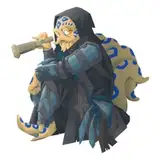
However, when Titan Souls clicks it really clicks. I love the detailed pixel art and all the different boss forms. You don't just fight a gauntlet of increasingly thick humanoids, things get pretty weird. An early favorite of mine is a large cube of ice resting in the center of a dimly lit room. The cube slides and hovers towards the archer and the arrow can't crack its frozen exterior. Players have to use an open flame in the room to ignite the arrow and melt the ice; this reveals a naked brain that continues to bounce about until the archer finishes the job.
Titan Souls began as a Ludum Dare game designed by three people over one weekend in 2013 around the theme "You Only Get One." This prototype—which remains freely available as of this writing—resembles the finished product with Titans looking and moving much like ones found in the retail version. The game's title and its learn-by-dying backbone reflect the then-recent Dark Souls phenomenon as the term "souls-like" had begun to catch on; once Dark Souls II came out in 2014 and Bloodborne in 2015, video games with a high difficulty curve truly came into vogue.
Despite my history of finding death-heavy games intimidating, I was an early adopter of Titan Souls. I suspect its cross-buy status made it more appealing, since I could play it on console and Vita whenever my family insisted on watching TV. I also found the duels welcoming as the prospect of "just one more attempt" kept me from putting the game down for long.
I never successfully opened the second gate but I enjoyed Titan Souls enough to namedrop it on my Game of the Year list, writing "instead of whittling down a giant lifebar with repeated attacks like so many other action games, Titan Souls just asks players to get it right once. I appreciate games that don’t waste my time."
Titan Souls never found the audience that Dark Souls did, but developer Acid Nerve must have felt good about its mechanics; their next game in 2021 called Death's Door also had its share of behemoths to take down, although in a three-dimensional perspective. Also, Death's Door stars a crow which makes it much more appealing by default.
Having dabbled with but not completed any souls-like games in the decade since Titan Souls launched, I still think it accomplishes a lot through environmental storytelling and its all killer, no filler mortal combat. I wish more video games embraced brevity in designing boss health bars; Mario games tend to cap them at three hits, but slaying Zelda or Metroid bosses can feel like running a marathon.
For me, Titan Souls' bosses remain exemplary in their efficiency, delivering spectacle and tension despite their lack of endurance. Great bosses can turn a mediocre game into a memorable one while poorly balanced bosses sap my interest in continuing to play. Titan Souls' bosses become more than main events; they're the only events and I'm still thinking about them a decade later.
Writer/podcaster/performer Diamond Feit lives in Osaka, Japan but xer work and opinions exist across the internet.
Andrew O.
2025-04-20 14:04:46 +0000 UTC